Rather than treating soft skills as optional, leading L&D teams develop them as core capabilities that compound over time.
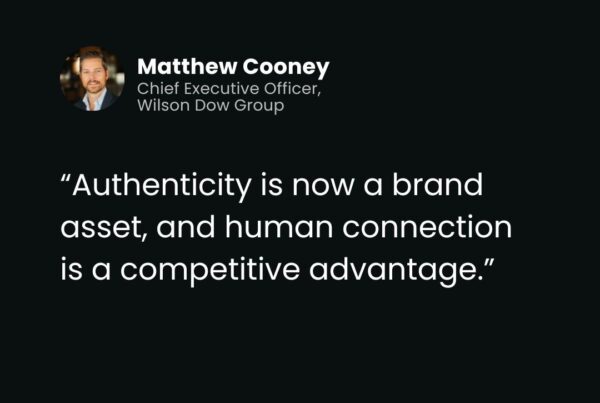
In his recent article published in LTEN, a leading learning and development publication for life sciences, David Cox, Experiential Learning Producer at Wilson Dow, explains why skills like curiosity, communication, critical thinking, and problem solving are foundational to effective training and not “nice-to-have” add-ons.
Why Capability-Based Learning Improves Training ROI
Traditional training programs often focus on information delivery: product knowledge, certifications, and compliance. While necessary, these programs are most effective when paired with experiential learning that builds durable capabilities.
Research cited in the article highlights that:
- 75% of professionals want to improve presentation and communication skills
- Nearly 50% report that ineffective communication impacts job satisfaction and stress
Experiential soft-skills learning helps audiences apply knowledge in varied, real-world situations, improving retention, adaptability, and long-term performance. Capabilities do not expire after a workshop, they continue to strengthen with use and amplify the value of every future training investment.
Experiential Learning as the Foundation of Continuous Learning & Development
Capability development is not a single event. It is learning infrastructure.
When organizations invest in experiential learning, they enable people to adapt training to real-world field scenarios, apply compliance principles instead of memorizing rules, and translate knowledge into confident decision-making.
This shift reframes learning ROI from short-term metrics to long-term performance and growth.
These ideas come to life in Wilson Dow’s Spotlight Series for Experiential Learning which showcases how capability-driven learning improves leadership development, field effectiveness, and training impact across industries.